
Andy’s Astronomy: Planets of “Battlestar Galactica”
Last week this column noted the first “alien” planet featured in the original Battlestar Galactica 1978 television series, and this week the five remaining plants are featured.
Last week this column noted the first “alien” planet featured in the original Battlestar Galactica 1978 television series, and this week the five remaining plants are featured.
A very expensive production at the time, the original Battlestar Galactica lasted just 24 episodes before being cancelled, but has developed a rather large cult following. Because it did not last long, viewers were introduced to just five planets: Kobol, Arcta, Equellus, Paradeen, and Gamoray. Of these five, Kobol proves the most interesting.
Kobol is supposed to be the birthplace of humanity, from which humans spread to the 12 colonies along with a lost 13th colony that was supposed to be Earth. When the human survivors arrive at Kobol they find artifacts from that ancient civilization.
It has been a recurring theme in science fiction that some very advanced ancient race of humans explored space leaving the beginnings of human civilization on habitable worlds. This theme was found in Star Trek that preceded Battlestar Galactica by 12 years and by Star Wars that debuted in 1977.
Kobol is a fictitious planet created by the writers of Battlestar Galactica … or is it? Interestingly, the Book of Abraham — a sacred text of the Church of Jesus Christ of Latter-day Saints — mentions a planet or star named Kolob described as being the “heavenly body nearest to the throne of God.” Did the writers of Battlestar Galactica intentionally use the name, just transposing two letters?
The other planets: Arcta, Equellus, Paradeen, and Gamoray were literary creations.
Making news last week, on the order of President Donald Trump, the Pentagon offered an initial dump of declassified images and documents of Unidentified Flying Objects” or UFOs which has created quite a stir.
This initial release included 161 files, 30 videos, and still images with more to follow. Among the documents were Apollo astronauts that claimed to have seen some strange objects near our moon.
Images of possible UFOs present an intriguing variety of sizes and shapes. One such video lasts nearly two minutes showing a small bright dot cruising among windmills.
The Pentagon is supposed to be releasing more images as they are declassified, which begs a question about images remaining classified.
Keep your eyes on the sky for passing fireballs.
Meteors can flash across the sky anytime, day or night, with extraordinarily bright meteors referred to as fireballs — and they are spotted quite often.
On Tuesday, May 5, seven people across Alabama, Georgia, and Tennessee reported seeing a fireball.
The fireball was first reported at 9:40 pm Central Time by a skywatcher in Birmingham, AL, who reported that it was “definitely was not like anything else I’ve seen in the sky.” The fireball was seen as far north as Sparta, TN, as far east as near Athens, GA, as far west as Birmingham, AL, and as far south as Auburn, AL. Skywatchers in Atlanta and Stone Mountain also reported seeing the fireball which appeared to travel from west-northwest to east-southeast.
None of the skywatchers reported hearing any noise attributable to the fireball but one witnessed it fragment into smaller pieces.
Anyone seeing a fireball is urged to report the sighting to https://amsmeteors.org
We will continue researching planets found in science fiction soon. In the meantime going outside and looking at the sky, especially the night sky, can be fun and educational for the entire family.
There are a number of free apps available to help identify stars and constellations, and some of the apps will show satellites.
Happy skywatching!
Before you go...
Thanks for reading The Harris County Journal. We hope this article added to your day.
We are a nonprofit, local newsroom that connects you to the whole story of Meriwether County. We live, work and play here. Our reporting illuminates and celebrates the people and events that make Middle Georgia unique.
If you appreciate what we do, please join the readers like you who help make our solution-focused journalism possible. Thank you
Related Articles

Odds and Ends, Bits and Pieces, Flotsam & Jetsam
Some things I’ve smiled about recently … some that happened to me, some that I found. Enjoy …
This Week in American History
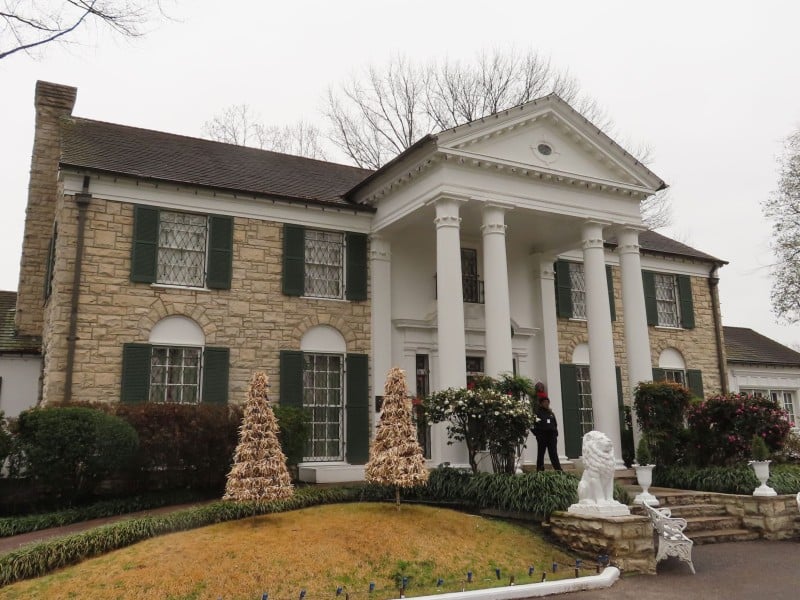
This week in 1984, Priscilla Presley opens Elvis Presley’s home to the public as a museum – expect for the bathroom in which he died which remains closed to visitors. Graceland remains a huge attraction for fans and tourists alike.

DID YOU KNOW …? You are now reading the 500th “Did You Know…?” Column!
In October of 2016, I began this column. The story of how it came to be has been relayed here numerous times; I won’t go into it again.
That was 500 weeks ago.
This week, you are reading the 500th column in this series. It’s a milestone I never once thought would happen. I had actually assumed you’d all get tired of this stuff and stop reading it; far from it, you’ve asked for more.
Now, 500 columns in, I’m ready to get the next 500 underway. I have to thank all the editors who run this silly stuff I write, sharing it with all of you; and I thank you, the readers, who spend a part of your day with this nonsense, and make me feel good about doing it.
Five. Hundred. Columns.
Let’s keep it going, shall we? Read on!